
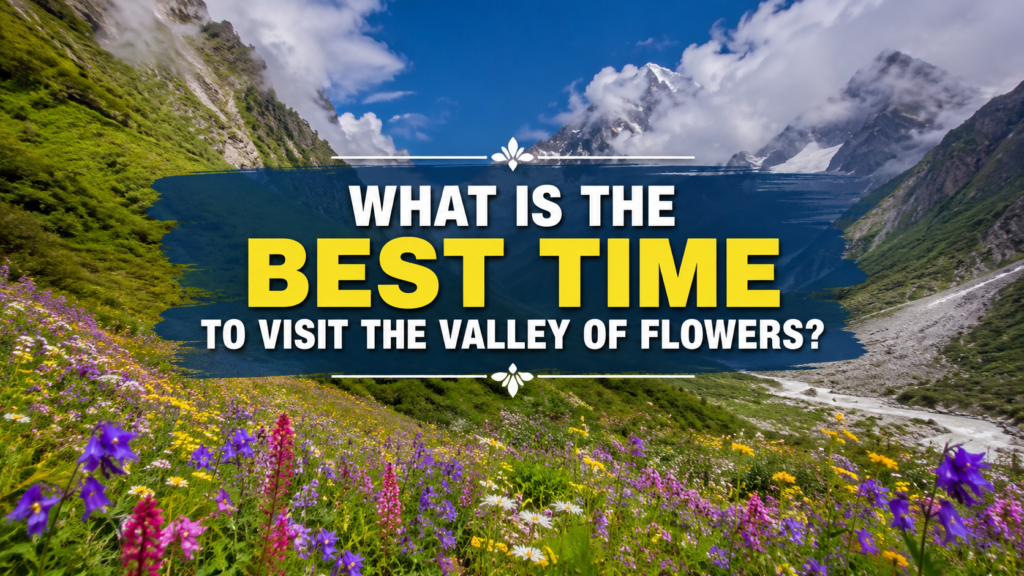
The best time to visit the Valley of Flowers is from mid-July to mid-August. During this period, the valley comes alive with thousands of colorful alpine flowers, lush green meadows, waterfalls, and fresh mountain landscapes. If you want to see the valley at its most beautiful, plan your trip between late July and early August. This is also the best season for nature lovers, photographers, and trekking enthusiasts.
The Valley of Flowers National Park opens every year from June to October, but each month offers a different experience. June brings fresh greenery, July and August offer peak flower blooming, and September welcomes clear skies with fewer crowds.
Table of Contents
ToggleBest Time to Visit the Valley of Flowers
If you are wondering what is the best time to visit the Valley of Flowers, the answer depends on what you want to experience. Some travelers visit to witness millions of blooming flowers, while others come for peaceful trekking, mountain views, or photography.
Located in the Chamoli district of Uttarakhand, the Valley of Flowers National Park is a UNESCO World Heritage Site famous for its rare Himalayan flowers, scenic trails, glaciers, waterfalls, and rich biodiversity. Every year, thousands of visitors complete the Valley of Flowers trek to experience one of India’s most beautiful natural landscapes.
The park remains open only for a few months each year because heavy snowfall covers the valley during winter. As the snow melts in summer, hundreds of flower species begin to bloom across the valley.
Valley of Flowers Opening Season
The Valley of Flowers National Park usually opens in the first week of June and closes in early October, depending on weather conditions.
During these four months, visitors can explore the valley through a scenic Himalayan trek that starts from Govindghat and passes through Ghangaria, the base camp for both the Valley of Flowers and Hemkund Sahib.
Outside this season, heavy snowfall blocks the trekking route, making the valley inaccessible.
Valley of Flowers Weather by Month
Understanding the Valley of Flowers weather helps you choose the perfect time for your trip.
Month | Temperature | Experience |
June | 8°C to 18°C | Fresh greenery and melting snow |
July | 10°C to 20°C | Flower blooming begins |
August | 10°C to 18°C | Peak flowering season |
September | 8°C to 17°C | Clear skies and fewer visitors |
The weather remains cool throughout the trekking season. Rain showers are common during July and August because of the monsoon, so carrying proper rain gear is important.
Which Month Has the Most Flowers?
If your main reason for visiting is to see the valley covered with colorful flowers, choose late July to mid-August.
This period offers the highest number of blooming alpine flowers. Every week, different flower species bloom naturally, making the landscape change continuously throughout the season.
Some of the flowers you may see include:
- Himalayan Blue Poppy
- Cobra Lily
- Primula
- Marsh Marigold
- Himalayan Daisy
- Anemone
- Geranium
- Bistorta
- Pedicularis
- Himalayan Bellflower
These flowers create the magical scenery that has made the Valley of Flowers National Park famous around the world.
Best Time to Visit the Valley of Flowers for Photography
Photographers usually prefer late July and early August because the valley looks its most colorful during this period.
Morning hours offer the best natural light. Fresh rain often leaves flowers sparkling with tiny water droplets, while clouds drifting over the Himalayan peaks create dramatic backgrounds.
Nature photographers can also capture waterfalls, alpine meadows, glaciers, rivers, butterflies, and rare Himalayan plants during the trek.
With every step along the Valley of Flowers trek, you’ll find new landscapes worth photographing.
Best Time to Visit the Valley of Flowers for Trekking
The best time to visit the Valley of Flowers for trekking is from July to September. During these months, the trekking trail remains open, the weather stays pleasant, and the valley offers breathtaking views.
The trek starts from Govindghat and passes through Ghangaria, the last village before the national park. From Ghangaria, you need to trek around 3.5 to 4 km to reach the Valley of Flowers. The trail is well-marked and suitable for beginners with a reasonable level of fitness.
The route takes you through dense forests, wooden bridges, waterfalls, mountain streams, and scenic valleys. Every turn offers a new view of the Himalayas, making the journey as beautiful as the destination itself.
Best Time to Visit the Valley of Flowers with Hemkund Sahib
Many travelers combine the Valley of Flowers trek with a visit to Hemkund Sahib, one of the highest Sikh pilgrimage sites in the world.
The best months for visiting both places are July and August. During this time, the Valley of Flowers is covered with blooming flowers, while the trail to Hemkund Sahib remains open.
Most visitors spend one day exploring the Valley of Flowers and another day trekking to Hemkund Sahib from Ghangaria.
Valley of Flowers Itinerary
Day 1 – Reach Govindghat
Arrive at Govindghat from Haridwar, Rishikesh, or Dehradun. Stay overnight before starting the trek.
Day 2 – Govindghat to Ghangaria
Trek around 13 km or hire a shared helicopter or mule service if available. Enjoy beautiful mountain views throughout the journey.
Day 3 – Explore Valley of Flowers National Park
Start early in the morning and spend the day exploring the valley. Walk through flower-filled meadows, waterfalls, wooden bridges, and alpine landscapes before returning to Ghangaria.
Day 4 – Visit Hemkund Sahib
Trek to Hemkund Sahib and return to Ghangaria by evening.
Day 5 – Return to Govindghat
Complete your trek and continue your journey home.
This itinerary gives you enough time to enjoy both destinations without rushing.
How to Reach the Valley of Flowers
Reaching the Valley of Flowers is simple if you plan your trip in advance.
By Air
The nearest airport is Jolly Grant Airport, Dehradun, about 290 km from Govindghat.
By Train
The nearest railway stations are Haridwar and Rishikesh. Both cities have good rail connectivity with major Indian cities.
By Road
Regular buses and taxis connect Haridwar, Rishikesh, Dehradun, and Joshimath with Govindghat.
From Govindghat, begin your trek to Ghangaria and continue to the Valley of Flowers the next day.
Valley of Flowers Entry Fee
Visitors must purchase an entry ticket before entering the national park.
The entry fee may change each year, so check the latest rates before your trip.
Carry a valid government ID, as it may be required during ticket verification.
What to Pack for the Valley of Flowers Trek
Packing the right items makes your journey comfortable and safe.
Essential items include:
- Waterproof trekking shoes
- Raincoat or poncho
- Warm jacket
- Quick-dry clothes
- Small backpack
- Water bottle
- Energy snacks
- Sunscreen
- Sunglasses
- Cap
- Personal medicines
- Power bank
- Camera
Since the weather changes quickly in the Himalayas, always carry a light waterproof jacket, even on sunny days.
Travel Tips for Visiting the Valley of Flowers
A little preparation can make your trip more enjoyable.
- Start your trek early every morning.
- Wear comfortable trekking shoes with good grip.
- Carry enough drinking water.
- Avoid throwing plastic waste in the national park.
- Respect local wildlife and plants.
- Stay on the marked trekking trail.
- Check the weather forecast before starting your journey.
- Book hotels in Ghangaria in advance during July and August.
- Carry cash because digital payments may not work everywhere.
- Walk at a comfortable pace and take short breaks during the trek.
Is the Valley of Flowers Worth Visiting?
Yes, the Valley of Flowers is one of the most beautiful trekking destinations in India.
Its colorful alpine flowers, peaceful surroundings, waterfalls, glaciers, and snow-covered Himalayan peaks create an unforgettable experience.
The valley is home to hundreds of rare plant species and several Himalayan animals, making it a paradise for nature lovers, birdwatchers, trekkers, and photographers.
Whether you are planning your first Himalayan trek or looking for a scenic monsoon adventure, the Valley of Flowers offers memories that last a lifetime.
Conclusion
If you are still wondering what is the best time to visit the Valley of Flowers, plan your trip between late July and early August for the most spectacular experience. This period offers peak flower blooming, pleasant weather, vibrant landscapes, and excellent trekking conditions.
If you prefer fewer crowds and clearer mountain views, September is another excellent choice. June is perfect for peaceful trekking and fresh greenery, while July marks the beginning of the famous flower blooming season.
No matter when you visit during the official season, the Valley of Flowers National Park promises breathtaking scenery, fresh mountain air, colorful alpine flowers, and one of the most rewarding treks in Uttarakhand. With proper planning, comfortable trekking gear, and the right travel season, your Valley of Flowers trek will become an unforgettable Himalayan adventure.
Frequently Asked Questions
What is the best time to visit the Valley of Flowers?
The best time to visit the Valley of Flowers is from mid-July to mid-August, when thousands of flowers bloom across the valley.
Which month has the maximum flower bloom?
August usually offers the highest number of blooming flowers, making it the most colorful month to visit.
Is the Valley of Flowers trek difficult?
No. The trek is considered easy to moderate and is suitable for beginners with basic fitness.
How many days are enough for the Valley of Flowers?
A 4 to 5-day trip is ideal if you also plan to visit Hemkund Sahib.
Can beginners visit the Valley of Flowers?
Yes. Beginners can complete the trek by maintaining a steady pace and wearing proper trekking shoes.
Is the Valley of Flowers safe?
Yes. The trek is generally safe during the official opening season. Always follow weather updates and local guidelines.
When does the Valley of Flowers open?
The national park usually opens in early June and remains open until early October, depending on weather conditions.